






Commercial and Industrial Energy Storage - New Energy Power Market Industry
Commercial and industrial energy storage refers to the electric energy storage system applied in the commercial and industrial fields, which is mainly used to optimize the energy use, reduce the cost of electricity, improve the reliability of power supply, and support the integration of renewable energy. Its core objective is to realize economic gains and energy efficiency through intelligent charge/discharge management.
1. Composition of commercial and industrial energy storage
Commercial and industrial energy storage systems typically include the following key components:
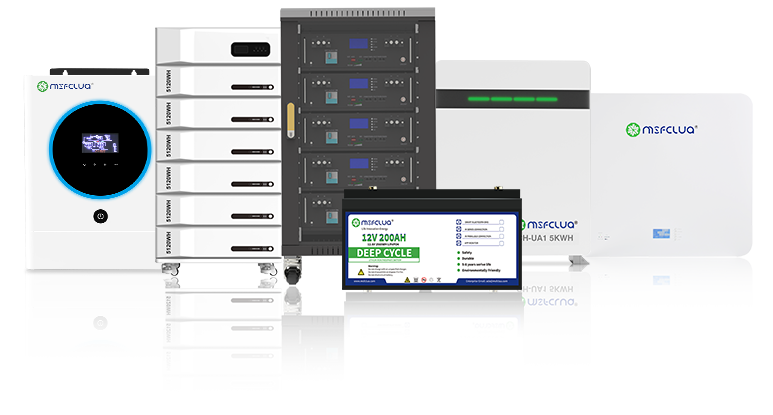
Energy storage battery: the core device for storing electrical energy, such as lithium-ion batteries, lead-acid batteries, and liquid current batteries.
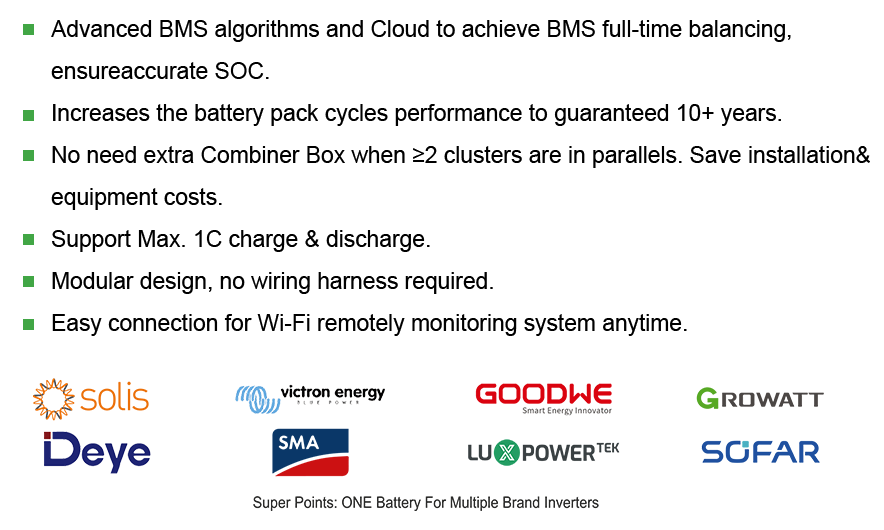
Battery Management System (BMS): monitors battery status (e.g. voltage, temperature, SOC) to ensure safe operation.
Energy Management System (EMS): Intelligent control of charging and discharging strategies to optimize energy use.
Inverter (PCS): Realizes the conversion of DC power (battery) to AC power (grid/load).
Grid Connection: Supports grid-connected (participation in the electricity market) or off-grid (independent power supply) operation.
Benefits of commercial and industrial energy storage systems
1、Direct Economic Benefits
Electricity cost reduction
Government subsidies and tax incentives
2、Energy management upgrade
Efficient utilization of renewable energy
Smooth output of photovoltaic/wind power
Microgrid support: Industrial park optical storage microgrid realizes off-grid operation and guarantees power supply for key loads.
Power Reliability Upgrade
Emergency power backup: replace diesel generators and realize millisecond-level backup power switching.
Voltage transient drop management: solving the voltage fluctuation problem of sensitive loads in precision manufacturing industry.
3、Grid synergy value
Auxiliary Service Benefits
Participate in the frequency regulation market;
Provide reactive power compensation, black start and other services to gain additional revenue.
Deferring grid investment
Reduce the need for transformer/line upgrades through “energy storage instead of capacity expansion”.
4、Environmental and Social Benefits
Carbon emission reduction to help ESG
1MWh of energy storage reduces CO₂ by about 500 tons per year (equivalent to planting 27,000 trees);
Meet the low-carbon requirements of EU CBAM and China's dual-carbon policy on supply chain.
Power system transformation support
Enhance renewable energy penetration and reduce fossil energy dependence.
5、Strategic Competitive Advantages
Energy autonomy control
Avoiding the risk of power restriction and shutdown.
Green power trading qualification
Obtain carbon footprint certification and enter the international high-end supply chain.
6、Technology value-added potential
(1). Asset financialization
Securitization of energy storage assets;
Participate in power futures market to hedge price risk.
(2) Digital integration
Combining AI to predict charging and discharging strategies;
Blockchain to realize peer-to-peer energy transactions.
Summarize: the “triple benefits” of industrial and commercial energy storage.
(1) Financial level: reduce the cost of electricity + access to policy dividends;
(2) Operational level: improve power supply quality + strengthen production continuity;
(3) Strategic level: realize low-carbon transformation and enhance market competitiveness.
With the global electricity price market reform and tightening carbon constraints, industrial and commercial energy storage is changing from a “cost center” to a “profit center”, and becoming a necessary option for new infrastructure for enterprises.
Application of industrial and commercial energy storage system
Commercial and industrial energy storage system is one of the most economical and flexible scenarios in the current energy storage application, which mainly reduces costs and increases efficiency for enterprises through tariff arbitrage, demand management, emergency power backup, etc., and at the same time, participates in power grid interaction. The following are its core applications and key points:

System design trends:
High-voltage cascade solution: 1500V system to reduce PCS cost (10% cost reduction compared to 1000V system).
Intelligent EMS: Integration of PV prediction, load prediction, and dynamic optimization of charging and discharging strategies.
2. Risks and Responses
Electricity price fluctuation risk
Countermeasure: Signing energy storage capacity lease agreement (e.g. park guaranteed tariff).
Battery degradation
Countermeasure: Select LFP batteries (cycle life > 6000 times) and configure health degree monitoring system.
Safety Prevention and Control
Requirements: mandatory configuration of combustible gas detection, water fire protection system (refer to GB/T 36276-2018).
3. Future Trend
Virtual power plant (VPP) integration: aggregation of distributed energy storage to participate in demand response, energy storage in a park in Shanghai increased annual revenue by 20% through VPP.
Optical storage and charging integration: charging station configuration energy storage to achieve “low charging and high discharge”, Shenzhen, a bus station project to reduce electricity costs by 35%.
Hydrogen storage coupling: steel and other high energy-consuming enterprises to explore the “green power hydrogen + energy storage” to achieve zero-carbon transition.
Industrial and commercial energy storage has changed from “optional” to “just need”, especially in the context of frequent power restrictions and accelerated marketization of electricity prices, China's industrial and commercial energy storage installed capacity is expected to exceed 8GWh by 2024. Enterprises need to combine their own load characteristics, local policies and technical economy to choose the optimal solution.
1


